




The literary food chain

TS Eliot: most writers amuse or starve. (Drawing by Rob Cowan).
In the late 1960s I was in a secondhand bookshop. The resident hanger-on, who was leaning on the counter, observed my carefully curated hipster attire and commented that the shop did not sell ‘cowboy books’. I gave him my most disdainful look and asked the proprietor for the most esoteric title I could think of on the spur of the moment. ‘Do you have Rossetti’s The House of Life?’ I enquired. Of course, the comment was a slight and the response a conceit: the truth is that both cowboy books and Rossetti’s sonnets can, in the wrong hands, be heavy sledding. Welcome to the shark-infested waters of literary criticism.
In shallow coastal waters swim the smaller species who provide you and me with advice on what we should be reading – if we can stand the hype. But beyond the continental shelf lurk much bigger creatures squabbling over structuralism, post-modernism and countless other isms and hell-bent on shoehorning evidence into their pet theory. Stylometry – the drawing of inferences from stylistic traits – traditionally misused to reassign the works of Shakespeare can now, with computers, probably prove that Shakespeare’s Pericles was written by James Joyce; or at least one of the five James Joyces that were once so credited with writing Ulysses.
TS Eliot made a good attempt to make sense of this high end of the food chain in his lectures at Harvard in 1932 in the series founded in the memory of the art historian and critic, Charles Eliot Norton. In these, later published as The Use of Poetry and the Use of Criticism, he somewhat deprecated the work of academic critics, and lavished most praise on the perceptions of those who were first and foremost poets, those most at home with ‘the natural genius of the language’: Dryden, Coleridge, Wordsworth and Arnold.
Literature and the other arts are often cited as contributors to people’s wellbeing but, if you wish to be enlightened, Eliot’s lectures are not the place to start. At one level they might be seen as the height of academic erudition for an exceptionally well-read audience, or they could be a sophisticated satire on a load of highfalutin nonsense. Maybe they are both. Nevertheless, it is surely true that, for most writers, motivation may be artistic, but they must, as Eliot puts it, ‘amuse or starve’.
Art theorists of all genres are constantly searching for the elusive quality that distinguishes the masterpieces from the merely competent. The Committee for the Charles Eliot Norton Lectures may have pointed towards that quality when they defined the scope of the lectures as ‘poetry in the broadest sense’. This metaphorical use of the word ‘poetry’ has resulted in the lectures being delivered by such diverse luminaries as Igor Stravinsky, Charles Eames, Herbie Hancock and the Oxford academic Maurice Bowra; in this latter case presumably in the committee’s ignorance of one critic’s opinion of Bowra’s literary contribution: ‘his prose was unreadable and his verse was unprintable.’
Publishers and critics love the word ‘best’, which can be a helpful indicator or can lead to perceptive introductions to complex or wide-ranging topics. But such usage often leaves unanswered questions, especially the question ‘why’? Pevsner’s The Best Buildings of England is a lovely book with lavish illustrations of 101 buildings accompanied by the most euphoric of Pevsner’s prose on which the editors based their subjective selection. Oh, for the sequel: Why the Next Best Were Omitted.
Back in the shallows, the biggest problem with publishers’ promotion of new titles is that it drowns out the wealth of literature remembered only in the back catalogues of revivalist publishers. Unfortunately, nobody is on hand to adjudicate between the new and the lastingly good from the reader’s viewpoint. So in the end we have to find the ‘poetry’ for ourselves from reviews, book groups, libraries and our own experience; while not forgetting our secondhand bookshops or the words of Norton’s close friend the philosopher Ralph Waldo Emerson: ‘Tis the good reader that makes the good book.’
This article originally appeared in the Institute of Historic Building Conservation’s (IHBC’s) Context 183, published in March 2025. It was written by James Caird.
--Institute of Historic Building Conservation
Related articles on Designing Buildings Conservation.
IHBC NewsBlog
IHBC sponsors Gardens Trust event 23-4 Sept 2026
.jpeg)
'Learning from the Past, Shaping the Future’ takes place in Milton Keynes
Renovations to Frank Lloyd Wright's Fallingwater complete
.jpg)
World Heritage Preserved project opens house for tours again
Shakespeare Birthplace Trust places Hall's Croft on HAR Register
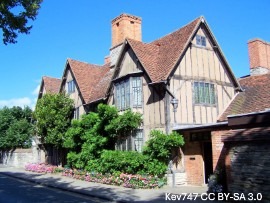
Stratford-upon-Avon home of Shakespeare's daughter is 'At Risk'
Lady Grange’s House repaired on St Kilda
.jpg)
National Trust for Scotland repairs stone cleit with link to famous island resident
Griff Rhys Jones on BBC Radio 4 Today programme
,_Green_Lane,_Derby.jpg)
The Victorian Society’s President unveiled its latest Top Ten Endangered Buildings 2026.
Need a MATE? Book your place now.
IHBC offers free webinars on applying for IHBC accreditation (Full & Associate).
UK Stained Glass Repository finds windows new homes
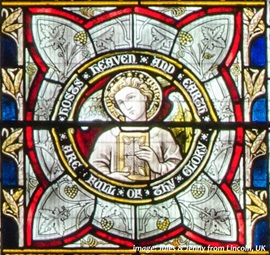
How are stained glass windows are rescued, stored and repurposed?
APPGEBE report sets high aims for quality
'Government must not sacrifice quality in drive to build 1.5m homes'
New measures protect Historic Shipwrecks from heritage crime

Underwater cultural heritage benefits from new HE guidance
How could the City of London skyline look in 6 years' time?

Visualisation shows approved planning applications as completed buildings
National Trust for Scotland calls for VAT cuts

Heritage neglect is encouraged by current policies
IHBC's 'Context' Issue 186 features Industrial Heritage
IHBC's members' journal reports on the challenges of conserving infrastructure
Book now for IHBC Annual School 2026

IHBC Annual School is taking place 18-20 June 2026 in Newcastle
RICHeS Research Infrastructure offers ‘Full Access Fund Call’
RICHeS offers a ‘Help’ webinar on 11 March
Latest IHBC Issue of Context features Roofing
Articles range from slate to pitched roofs, and carbon impact to solar generation to roofscapes
Three reasons not to demolish Edinburgh’s Argyle House

Should 'Edinburgh's ugliest building' be saved?
IHBC’s 2025 Parliamentary Briefing...from Crafts in Crisis to Rubbish Retrofit
IHBC launches research-led ‘5 Commitments to Help Heritage Skills in Conservation’
How RDSAP 10.2 impacts EPC assessments in traditional buildings

Energy performance certificates (EPCs) tell us how energy efficient our buildings are, but the way these certificates are generated has changed.